The smart consumer’s car inspection checklist
The smart consumer’s car inspection checklist
Key takeaways
Use word of mouth and online customer ratings to find a reputable vehicle inspection station
Check your state’s requirements before getting an inspection
Fees may vary by vehicle inspection station
Owning a vehicle is more than just turning the key and driving to your next destination. Car ownership also comes with costs and responsibilities, including maintenance, fuel, and repairs.
Some US states add to that cost by requiring periodic safety inspections to ensure the vehicle is safe to operate on the road. If the inspection turns up any safety issues, such as a burned-out taillight or inadequate tire tread, you must repair it to pass the inspection.
If your vehicle doesn’t pass inspection and isn’t eligible for a waiver, you might find yourself stranded—without an approved safety inspection and a car that’s not legal to drive on the road. You may not be able to renew your license plate or other registration without the safety inspection, and your car could be impounded if you’re caught driving it without proper registration. Then you’ll have to rely on friends, family, or public transit to get to work and do errands.
But with the right information in hand—which includes state requirements, how to find a certified inspector, and a list of potential costs and red flags—you can keep your ride on the road while saving time and money. Use this car inspection checklist to learn the basics and find a top-notch inspection station.
When you’ll need a vehicle safety inspection
Vehicle inspections aren’t required in every state, but 18 and one territory require them regularly. According to AAA, these states and territories include:
Alabama (performed at the DMV during initial ownership transfer only)
Delaware
Hawaii
Louisiana
Maine
Maryland
Massachusetts
Missouri
New Hampshire
North Carolina
Pennsylvania
Rhode Island
Texas
Utah
Vermont
Virginia
West Virginia
Puerto Rico
There are no federal standards for vehicle inspections; each state has its own rules for inspection frequency and inspection points. For example, Alabama requires a safety inspection before transferring vehicle ownership, whereas Vermont requires an annual safety inspection.
Safety inspections vary by state, but those carried out at certified repair stations generally include taking measurements of critical safety items such as tire tread depth, and brake pad and rotor thickness. They also include checking wheel bearings, lights and turn signals, seatbelts, exhaust systems, body rust and damage, door operation, rearview mirror operation, and more.
Some states also permit state police to require a vehicle inspection if they stop a vehicle they suspect is unsafe for the road. These inspections go above and beyond the regular required inspections and may apply in states that don’t require regular vehicle inspections.
When your vehicle may be eligible for a safety inspection waiver
Some states waive inspections for certain types of vehicles. In Virginia, for example, antique vehicles that are 25 model years or older as of January 1 of the current year are exempt from safety inspections. In some states, including Colorado and Illinois, new cars and electric vehicles don’t need inspections either.
When you’ll need an emissions inspection
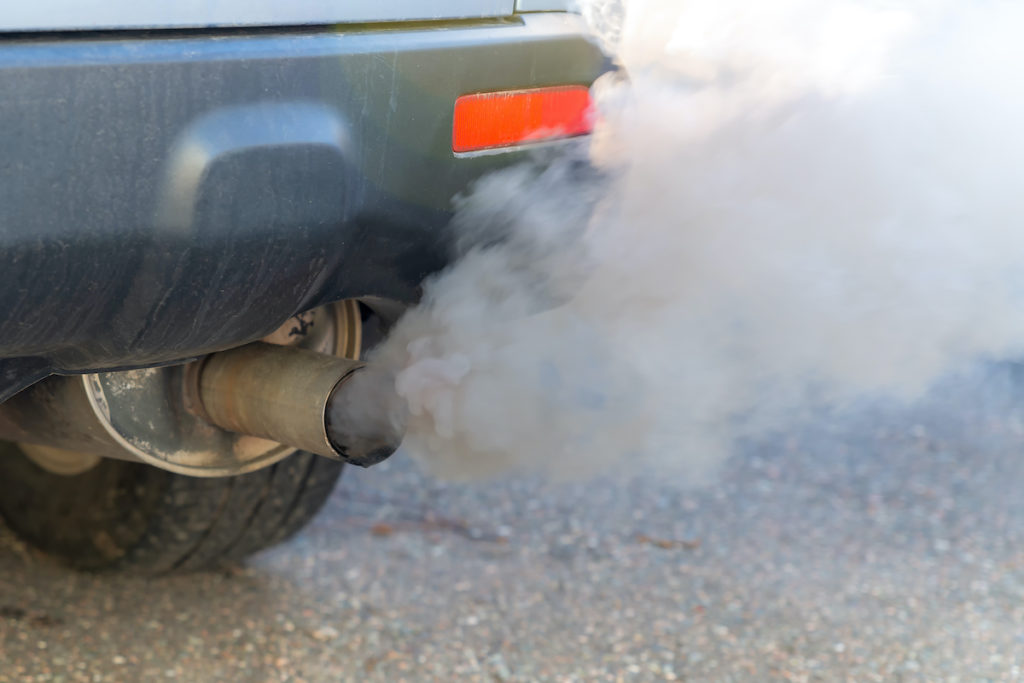
While only 18 states and one US territory (Puerto Rico) require a vehicle safety inspection, most require emissions inspections, also known as smog tests. Emissions inspections verify that the potentially harmful chemicals your vehicle emits through its exhaust are up to state or local regulations.
The 17 states that have no emissions inspection requirements include:
Alabama
Arkansas
Florida
Hawaii
Iowa
Kansas
Michigan
Minnesota
Mississippi
Montana
Nebraska
North Dakota
Oklahoma
South Carolina
South Dakota
West Virginia
Wyoming
In some states with emissions inspection requirements, laws vary by location. In Alaska, only Anchorage and Fairbanks require emissions testing.
Like vehicle safety inspections, timing and type of inspection varies by state. Arizona, for example, requires an emissions test before registering a vehicle, while the District of Columbia requires biannual emissions testing.
When your vehicle may be eligible for an emissions inspection waiver
Because vehicle emission controls are relatively “new”—they began with the addition of exhaust gas recirculation valves in 1972 and continued with catalytic converters, onboard computers, and oxygen sensors in 1981—most older vehicles are exempt from emissions testing.
California exempts all vehicles manufactured before 1976, while Massachusetts exempts all vehicles manufactured before 1997.

Pro tip: Some states offer repair waivers if you spend a certain dollar amount on fixing faulty emissions equipment. If, for example, you fail Pennsylvania’s emissions test and spend at least $150 attempting to repair the issue, you may be eligible for a one-year emissions inspection waiver.
Average vehicle inspection cost
Like car inspections, inspection fees vary by state. State-by-state inspection service pricing is charged as follows:
Alabama: Included with registration fees
Delaware: Included with registration fees
Hawaii: $25
Louisiana:$10–20, depending on registration location
Maine: $12.50–18, depending on county
Maryland: Varies by inspection shop’s labor rate (average $80)
Massachusetts: $35 (most vehicles)
Missouri: Up to $12
New Hampshire: Varies by inspection shop (average $20-50)
North Carolina: $13.60
Pennsylvania: Varies by inspection shop
Rhode Island: $55
Texas: $7
Utah: Up to $30
Vermont: Varies by inspection station’s labor rate (generally $35–50)
Virginia: $20
West Virginia: Up to $14.60
Puerto Rico: Varies by inspection facility (generally $85)
Finding an inspection station

In Alabama and Delaware, the Department of Transportation or the Department of Motor Vehicles handle all auto inspections, so there’s no need to find an independent inspection station. Check with the local DMV for approved inspection stations.
If your state uses independent shops to perform vehicle safety inspections and emissions tests, the process starts with finding the right inspection station. Because these services are designed to identify issues with your vehicle, finding a reputable inspection station is key.
Start by checking with friends and family. They’ll likely have a go-to shop for vehicle inspections and steer you away from less reputable operations. From there, take your search online and read customer reviews.
Pro tip: Once you gather a list of potential inspection stations, start calling to check availability a few weeks before your inspection due date. These stations get busy and may not be able to accommodate your car within your preferred timeline.
For example, Georgia requires all emissions inspections to be done before a car can get its annual registration—and registrations are due at the end of the vehicle owner’s birthday month. Therefore, emissions inspection locations are usually busier at the end of every month.
What to expect at the vehicle inspection station
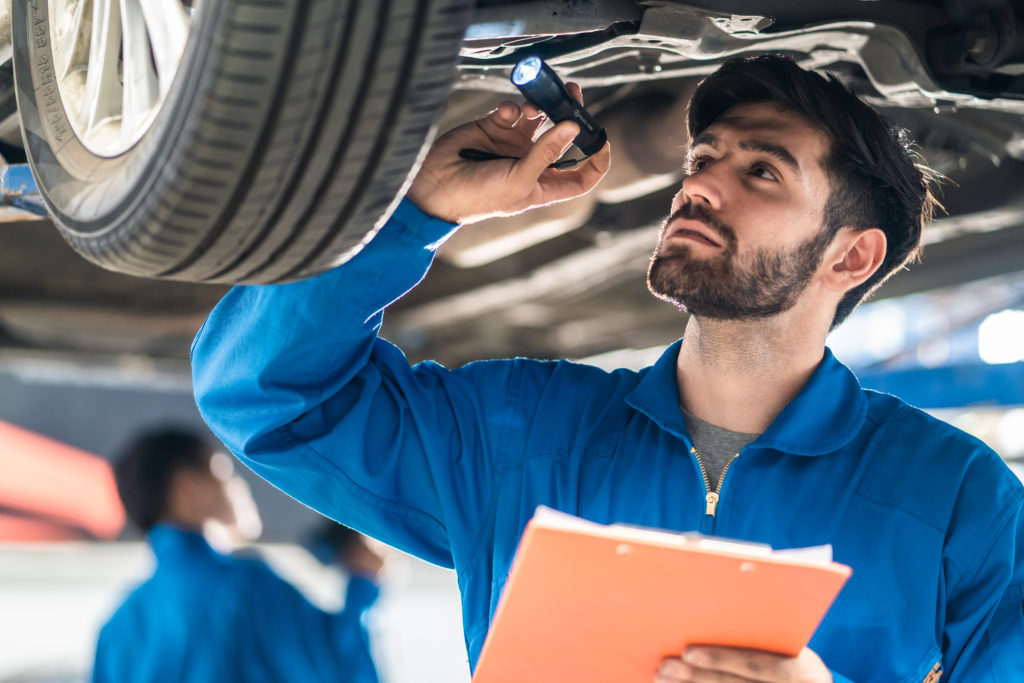
In states that require emissions and safety inspections, one inspection station may manage both tasks. These inspections are generally assigned to an Automotive Service Excellence (ASE)-certified technician, so you know a qualified mechanic is handling the job.
When you arrive at the vehicle inspection station, expect the shop to gather information from your vehicle, including the vehicle identification number (VIN), vehicle registration, insurance information, license plate number, mileage, and year, make, and model.
Once the shop has this information, you’ll sign a few documents. Make sure to read them thoroughly and always request an estimate before allowing any repairs.
If the shop has an inspection slot open, the technician will immediately take your vehicle for a test drive, then pull in your car and begin the inspection process. If the shop is busy, they may ask you to wait or drop off the vehicle to pick up later.
The technician will go through a car inspection checklist that follows state or local guidelines. Items the technician may inspect include:
Windshield wiper operation
Wiper blades
Exhaust system
Power steering fluid
Brake lights
Turn signals
Headlights
Hazard lights
Seat belts
Windshield washer fluid
Brake pads and rotors
Brake fluid
Brake pedal operation
Coolant level and condition
Unsafe body damage (dents and rusting)
Sagging headliner (interior roof material) that may obstruct vision
Parking brake operation
Front, side, and rear windows
Rearview mirror operation
Spare tire
Tire pressure
Tire tread depth
Steering wheel operation and position
If your vehicle passes inspection, they’ll place a state vehicle inspection sticker somewhere on the vehicle—generally on the windshield.
If you’re in an area that also requires emissions testing, the technician will perform that, too. An emissions test has a few steps, starting with the technician scanning the vehicle’s on-board computer for any emissions fault codes.
Not every vehicle will go through this test, as vehicle manufacturers weren’t required to add standardized onboard diagnostics (OBD)—known as OBD-II—until January 1, 1996, though some began adding in it 1994. Before 1996, most vehicles had their own OBD that required special equipment to determine emission-system faults.
The second step in the emissions test: exhaust evaluation, also known as the tailpipe sniffer test. The technician places a probe in the vehicle’s exhaust tailpipe to test for excessive harmful emissions.
The final part of the test is a visual inspection. Here, the technician is looking for physical damage, such as leaks or rust. They’ll also check for illegal modification, including catalytic converter bypasses or free-flow mufflers.
What happens if your car fails inspection?
If your vehicle fails the safety or emissions inspection, the technician or a sales associate will present you with a list of repairs. It may include fixes required to pass inspection, as well as other recommended repairs or maintenance.
Pro tip: A reputable shop will clearly mark what your car needs for inspection versus recommended fixes. If this isn’t clear, ask the employee to plainly identify only what’s needed to pass inspection.
Most inspection failures are due to small issues, such as faulty wiper blades, a burned-out turn signal, or a faulty oxygen sensor. So, you can often pass inspection without much expense. In some cases, though, repairs may be more serious. A clogged catalytic converter, excessive rust, or faulty onboard computer, for example, can lead to costly repairs.
In some states, you have a fixed amount of time—generally 30 days—to rectify the issue and get a free reinspection. Ask about your state’s policy, as this may help you decide whether to fix the issue during inspection or come back later for the repair.
Not all inspection stations are created equal
Even though vehicle inspection is government regulated, you may be dealing with an independent company that has its own priorities and budget to meet. It’s possible to run into those that use inspections as a way to separate you from more of your money.
Here are some red flags to watch for during vehicle inspection:
You can’t watch the inspection taking place
Due to insurance and safety regulations, most inspection stations won’t allow you to hang around inside the shop unsupervised while a technician inspects your vehicle. However, you should be able to view the process through a window in the waiting room or the garage’s bay door.
If the shop refuses to let you watch, even from a distance, this is an immediate red flag. Ask if you can watch before agreeing to an inspection.
You’re handed a laundry list of unrelated repairs

Vehicle inspection stations are in business to make money, so it’s well within their rights to suggest other repairs unrelated to those needed to pass inspection.
If the technician draws up a long list of repairs that aren’t on the car inspection checklist—and doesn’t distinguish between what’s inspection-related and what’s not—that’s another red flag.
Pro tip: Suggested repairs should be separated from inspection-related repairs.
The technician asks for cash to pass your car
A safety inspection is completely in a technician’s hands. So, it’s easy for them to fudge inspection papers and put a certification sticker on your vehicle for a few extra bucks.
If the technician approaches you for a bribe, reject their offer and go to a different station. Not only is a bribe illegal, it’s also punishable by fines and potential jail time.
Tips for your next trip to the vehicle inspection station
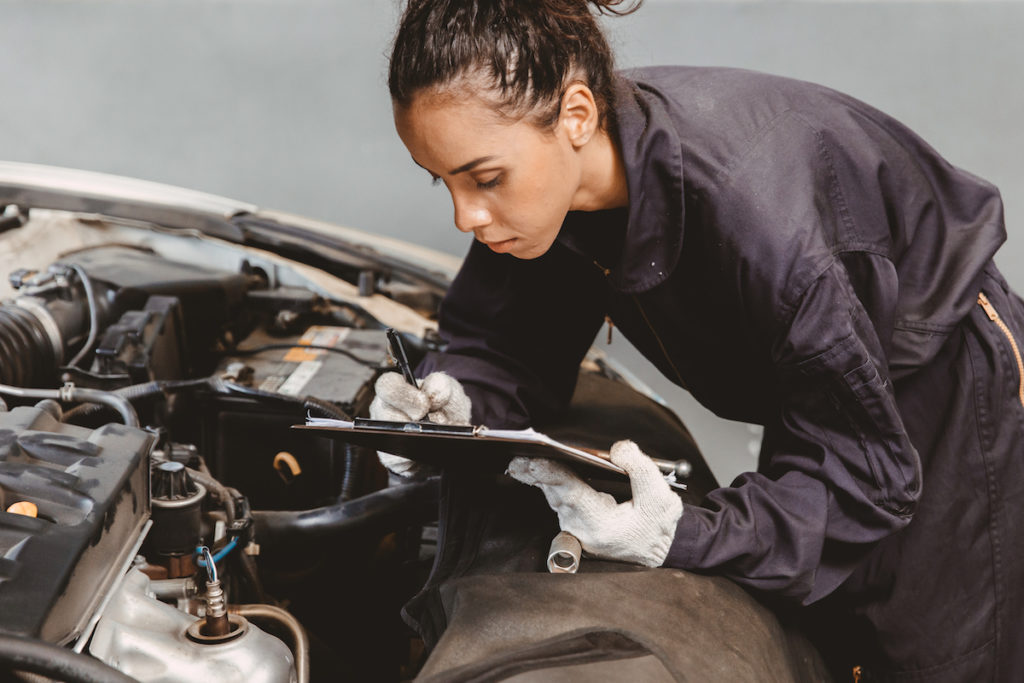
If you’re ready to get your car inspected, these tips can help you avoid potential scams:
Carry your own car inspection checklist
You can easily find minimum requirements for your state inspection online. Print them out and carry with you to the station. They’ll come in handy if the technician hands you a list of “necessary” repairs. Compare their recommendations to your vehicle inspection checklist and question any discrepancies. This lets the technician know you’re knowledgeable and prepared to question any fixes.
Bring a trusted friend
Bring a friend with you—preferably someone with automotive smarts. They can provide a second opinion on the station’s repair list, and suggest additional questions to ask.
Check their work
Ask the technician to show you the issues that need repairs. Don’t be afraid to question why flagged items won’t pass.
Tread depth, malfunctioning turn signals and taillights, warning lights, even brake pads are all issues the tech can show you. You’re generally allowed into the shop as long as you wear the required safety gear and have an employee supervising you. You can even ask them to take tread depth and brake pad measurements while you’re watching.
Getting a reliable, quality safety and emissions inspection is about doing your research, knowing your state’s requirements, and finding a mechanic or inspection service you can trust, year after year. After all, regular vehicle maintenance keeps your car safe on the road, and might prevent a catastrophic accident or repair bill in the future.
Find a good vehicle inspection station
Tell us about your auto needs and we’ll connect you with a trusted local inspection station.