19 questions to ask movers: Your ‘script’ for a trouble-free delivery
19 questions to ask movers: Your ‘script’ for a trouble-free delivery

Key takeaways
Always ask for a written binding estimate, to lock in your base moving price and avoid moving scams
Get details on service add-ons and insurance upfront, to avoid unexpected extra fees later on
Find out how your mover will prevent damage and loss, and how much protection you’ll get from their liability coverage
Hiring a mover is one of the hardest parts of moving to a new home. When trusting a moving company with your belongings, you want to know that they’ll show up, protect your stuff, and deliver it on time. Reliability is a must. So is honest pricing. It all comes down to knowing the right questions to ask movers before you sign a contract—and watching for hidden fees and other red flags that could bite when the bill comes.
As with any business, the moving industry has its share of bad actors, especially those working long distance, whose logistics are harder to track.

Pro tip: Rogue movers are known to make low binding estimates, then charge three or four times more, even holding clients’ belongings hostage until they’re paid.
The Federal Motor Carrier Safety Administration (FMCSA), which oversees vehicle safety, received 5,622 complaints about fraud by household goods carriers in 2020 alone. “The [general] public is the primary source of complaints,” confirms FMCSA spokesperson Jacqueline Alston. The agency offers a wide range of consumer protection resources on its website.
Thoroughly vetting movers is the best way to avoid unreliable moving services and scams. Don’t be afraid to ask all your questions—even ones you think are silly. A good, full-service moving company will gladly answer them.
This guide is your “script” for finding a trustworthy moving crew and ensuring peace of mind. It includes the essential questions to ask, answers you’ll want to hear, follow-up questions, and red flags, for the following key issues:
Mover’s business information
Cost estimates
Property handling
Delivery
Questions to ask movers about their business

Start your screening process by asking about a company’s licensing, services, and reputation. This will help you identify reliable moving crews and weed out suspicious ones.
1. Do you have the proper operating permits?
Answer: Moving companies operating across state lines within these 38 states must have a US Department of Transportation (USDOT) registration number. Movers should readily share that number with you. It should also appear on their website, and elsewhere online.
Local movers outside these 38 states may also have a USDOT number. It’s extra assurance, that they will comply with federal guidelines, but not a requirement.
Pro tip: To ensure the USDOT number is valid, cross-check it with the FMCSA database. The number’s operating status should be listed as “ACTIVE.”
Some states have their own licensing requirements for in-state moves, which you can find on each state’s Department of Motor Vehicles website. Movers may also be certified by the American Moving and Storage Association (AMSA), a trade group that requires background checks and a commitment to honorable business practices.
Follow-up question: How do these licenses or certifications protect me if something goes wrong with a move?
Van lines must adhere to guidelines created by the organization that licenses or certifies them. For example, USDOT-registered companies conduct regular and random drug and alcohol testing of drivers, while AMSA companies participate in annual reviews.
Red flag: Avoid hiring a mover that isn’t registered in a trusted database. You should also avoid companies with pending USDOT numbers. While they may be reputable, their operating status will be listed as “not authorized” in the USDOT database, so they may not have to adhere to the same guidelines.
2. How many years have you been in business?

Answer: Inexperienced movers are more likely to cause issues, such as damaged goods from poor packing. At least a year of experience is ideal.
Red flag: Be wary of movers who provide generic names, such as “moving company,” or have a history of frequent name changes—a trick some scammers use to hide their reputation.
3. Will you actually be moving my goods or brokering out to other movers?
Answer: Brokers schedule moves for many companies but aren’t authorized to perform them. If you’re working with a broker, be sure they’re registered with the FMCSA and abide by its regulations.
Follow-up question: Can you provide a list of moving companies you work with?
Reputable brokers typically have written agreements with select movers, so you’re not stuck without a mover on moving day. You can reach out to those moving companies to verify their agreements.
Red flag: Avoid brokers that masquerade as moving companies. The FMCSA requires brokers to clearly identify themselves in advertisements.
4. Do you offer liability coverage?
Answer: Most professional moving companies offer insurance for lost or damaged items, but coverage levels and reimbursements for loss or damage varies by mover.
For interstate moves, companies can provide two levels of coverage: released-value protection, which is included in the price of the move, and full-value protection, which costs extra. Local moving companies are still liable for loss or damage during transport, but the FMCSA does not mandate their coverage levels.
Always ask for detailed coverage options in writing and read the fine print carefully since mover-provided coverage will always be written in their favor.
Follow-up question: Can you show me an example of a free-coverage-level claim and explain available options above that?
“Find out what’s covered and how the moving company defines ‘damage’ at each coverage level,” Olsen suggests. “If you want to upgrade to full-value protection, clarify how much it will cost.”
Red flag: Customers are often surprised by the low level of protection that’s included with a move, according to Chad Olsen, founder and president of Camelback Moving. For example, with released value protection, you may only be reimbursed at a rate of 60 cents per pound for lost or damaged belongings. This usually doesn’t cover replacement value.
Pro tip: Consider purchasing your own insurance from a third party, especially if you’re moving high-value belongings—but beware of the fine print. Some plans require you to hire an affiliated mover (much like choosing an in-network doctor).
5. Are your employees insured?

Answer: Moving is a job that can easily lead to injury. To avoid liability for accidents that occur on your property, find a moving company that provides workers’ compensation and carries their own insurance.
Follow-up question: Can you provide a certificate of insurance?
Professional movers should be willing to provide this. It’s a common request, since some apartment or condo managers don’t allow movers on property without a copy.
Pro tip: You can also look up movers using the FMCSA Licensing and Insurance Carrier Search, then view their HTML report. If the “Insurance on File” meets or exceeds the “Insurance Required,” they are properly insured.
6. Does your company have enough equipment and crew for my move?
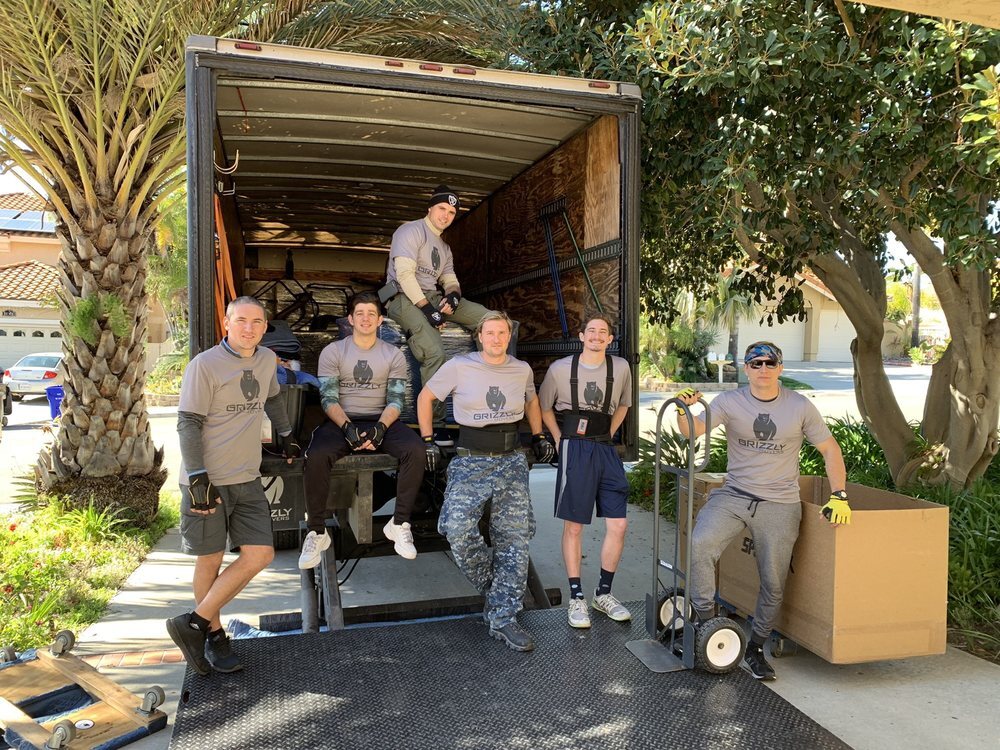
Photo: Grizzly Movers, San Diego, California
Answer: Reliable movers should guarantee that the correct-sized crew, moving trucks, and equipment (such as dollies and packing equipment) are available on moving day. They must also be prepared to handle any fragile items requested in the bid, such as oversized items or fine art.
Follow-up questions: Will you guarantee sufficient trucks and staff to complete my move on time? Who can I contact on move day if something goes wrong?
The moving crew should be made up of year-round employees, not temps, who have experience performing your exact moving needs. It should also include one designated foreperson (who may also be a mover) to troubleshoot any last-minute issues.
7. Do you offer storage facilities?

Answer: If you can’t move into your new home or apartment right away, a moving company can often store your belongings at a storage facility. Get the exact cost for this service based on the timeline and size of your move.
Follow-up questions: Will I need to pay for extra insurance? Is the storage site climate controlled? How do you prevent theft? Are the storage facilities owned by your company or a third party?
Storage services are typically offered by cross-state movers but they often use subcontractors to provide the service. Most renters insurance plans cover damage or theft at storage units up to 10% of your coverage limit. Added features, such as smart locks, alarm systems, and climate controlled storage will cost more.
Red flag: If movers work with a third-party, they may not be liable for loss or damage once your items are in a storage facility. Your homeowners or renters insurance may cover your items, but make sure coverage terms are specified in your moving or storage facility contract.
8. Can you provide references?
Answer: Legitimate moving companies should provide testimonials from past clients. Any awards or recognition from trustworthy organizations are also a huge plus. You’ll also want to look for customer reviews online.
Red flag: Beware of movers whose reviews sound too good to be true. Bad actors may spam sites like Google or Facebook with fake reviews that are overwhelmingly positive. Look out for fake profiles—typically those with no profile picture or other reviews. Also, make sure to use sites, such as Yelp, that filter fake reviews.
Questions to ask about the cost of moving
Moving fees are confusing. A good mover will explain exactly how much you can expect to pay and why—then guarantee that quote. Here are the important questions to ask.
9. How do you estimate the cost of a moving service?

Photo: Pure Moving Company, Los Angeles
Answer: Long-distance movers charge by weight and distance, while most local moving companies charge by the hour, based on the number of trucks and employees needed. Many local moving companies also have minimum charges, such as U-Haul’s two-hour minimum booking requirement. Make sure the company accurately estimates how long your move will take.
Follow-up questions: Are taxes, fuel, and travel time included or extra? How do you estimate charges for handling specialty items?
Added expenses may include fuel, cardboard boxes, cleaning, or moving bulky items such as pianos. Make sure these charges are included in the written, itemized estimate.
Pro tip: For local moves, “ask for the out-the-door cost based on a certain amount of hours,” advises Chad Olsen of Camelback Moving.
Red flag: For long-distance, avoid movers who give an estimate based on volume or cubic feet. Legally, companies moving across state lines must provide weight-based, non-binding estimates.
10. Does your company offer on-site binding estimates?
Answer: Reputable moving services will inspect your home before providing an accurate estimate. Once the on-site review is complete, ask for a binding estimate in writing that clearly states rates and company contact information.
Follow-up question: Does this binding estimate mean I won’t receive any additional charges after the fact?
The answer should be yes.
Red flag:Be wary of companies that don’t thoroughly assess the details of your move—and provide non-binding estimates via email or phone. You’ll likely get a lowball offer and end up paying more later.
11. What extra services do you offer and at what cost?

Answer: A binding estimate guarantees base pricing, but you can add extra services, such as packing, unpacking, or disassembly and reassembly of large pieces of furniture. These are charged at an extra hourly rate, plus the cost of any supplies needed.
Follow-up questions: Do you charge additional fees to carry items up or down stairs or for a “long carry” (if movers are unable to park close to your home)? What are these extra charges?
It’s customary for movers to charge for these inconveniences. Get the charges in advance, and in writing.
Red flag: Avoid companies that charge significantly more fees than other movers in your area. Grant Fowler, operations coordinator at King Moving Company, suggests asking: Is there anything extra? If I use this amount of time on move day, is that all I’ll be charged at the end of the job? “If you can get that in writing, all the better,” he said.
12. Do you require a deposit? What happens if I cancel?
Answer: Some movers require advance deposits. These shouldn’t exceed more than 25% of your estimate. You should be able to pay this deposit with a credit card, which protects you in disputing any unwarranted charges later.
Follow-up question: Does your cancellation policy allow full or partial refunds on deposits, and under what circumstances?
Moving companies often refund some or all of your deposit if you cancel or reschedule within a certain time frame, typically around two weeks.
Red flag: In general, avoid any companies that demand cash deposits or cash payments.
13. Will you provide a full inventory?
Answer: Legitimate movers keep a complete record of everything you’re moving, whether it’s packed by you or them. Each item should be listed with its value, condition, weight, and other important details in case of damage.
14. How can I reduce my moving costs? Will you beat competitors’ prices?
Answer: Moving companies would rather accommodate your budget than lose your business to a competitor. Ask about promotions or discounts, or if they’ll match a competitor’s price.
Follow-up question: Do you offer a discount for moves on off-peak days and times?
Many movers will charge less on weekdays or in winter, when they’re less busy.
Red flag: Movers who don’t include your discounted offer in a binding estimate aren’t required to follow through. Avoid any handshake deals.
Questions to ask movers about property handling

For a safe, successful move, it’s best to hire movers who’ll handle your property with care. Ask these three questions to find out how they’ll avoid damage.
15. How will you prevent damage?
Answer: Reliable movers use equipment that minimizes damage to your property and your home, including carpet coverings and moving blankets.They should also be trained in carrying boxes properly, stacking them in the right order, handling appliances, and protecting fragile items. And, they should never throw your boxes around.
Follow-up questions: What if I see careless activity during the move?
Most crews have a designated foreperson who leads the move and can be your go-to person for any issues.
16. How will you take care of specialty items?
Answer: If you have easily damaged items—such as a pool table, piano, art, or fine wine—use a mover with experience in handling fragile cargo. To check their track record, read reviews that mention specialty items. Consider transporting these items separately through a specialized delivery company—for example, piano movers.
Follow-up questions: What materials do you use to protect my fragile item? What does your moving process look like?
A good moving company will tailor their materials and process to your needs. For example, fine art movers may create custom packaging for your art based on the medium.
17. Will there be additional transfers?
Answer: Some long-distance companies consolidate moves to save money, which can increase the odds of damage. This isn’t necessarily a disqualifier, but it’s important to weigh cost savings against the potential headache of filing claims for lost or damaged items.
Questions to ask movers about delivering your stuff

Finally, make sure to clarify delivery logistics for both local and interstate moves.
18. What pickup and delivery-date guarantees do you offer?
Answer: Pickup and delivery dates should be firm. Get them in writing to avoid a no-show.
Follow-up questions: What are your reimbursement and priority-scheduling policies if movers don’t show up in the contracted time frame?
Most companies should offer flexibility in the event of a delay. If your movers are late, first contact the company and verify your pick-up window. In case of fraud, have the FMCSA’s contact information handy.
Red flag: Pickup and delivery issues are one of the most common types of moving complaints, according to FMCSA’s Alston. For delays caused by overbooking, the FMCSA requires movers to properly notify you and keep record of the issue—another reason to choose an FMCSA-registered business.
19. Who will provide final delivery services for long-distance moves?
Answer: Some interstate movers hand off cross-country moves to a third-party partner. If you’re moving long distance, find out exactly who you’ll be working with at the final destination. This way, you know who to talk to and steps to take in case of disputes.
Follow-up question: Does my binding agreement with your company also apply to the third-party mover?
The answer should be yes. Reputable movers usually have official partnerships with trusted third-party movers to deliver a seamless service.
Find a good moving company
Tell us about your move and we’ll connect you with trusted local pros.