Move-out cleaning: How to tidy up for home rental or sale
Move-out cleaning: How to tidy up for home rental or sale

Key takeaways
Move-out cleaning is required in many home rental and sales agreements
Deep cleaning beyond the basics may incur extra fees
For your own protection, ask the cleaning service for their insurance, bonds, and background-check references
You’re ready to leave your current home or apartment and move to a new place. Before you go, there’s one final task to handle: move-out cleaning.
Cleaning your old home is a step you don’t want to skip. For renters, leaving behind a dirty space can mean a poor landlord reference and unreturned security deposit. And for sellers, the entire closing could hang in the balance if you don’t tidy up as required by your contract—even if you listed the home “as is.”
When you’re focused on moving to a new home, however, the last thing you have energy for is making the old space spotless for a landlord’s eagle eye. Hiring a professional cleaning service can take that time-consuming task off your plate. Before you do that though, read this guide. You’ll learn how move-out cleaning is different from regular cleaning, how to choose a reliable service, what they should be handling, and how much it’ll cost.
What’s required for move-out cleaning?

In general, a move-out cleaning should leave the home clean and tidy for the next resident. But sellers and tenants may also be contractually obligated to complete a specific type of cleaning before they leave their homes.
Standard lease agreements and purchase agreements can vary by state, and the binding elements depend on what’s written in your contract. If a checklist is provided in your purchase, leasing, or rental contract, you must clean all the specified areas.
At the same time, cleaning that goes above and beyond what’s specified in your agreement might not be your responsibility. For example, even if your landlord requests that you sanitize high-touch areas for future tenants due to COVID-19, in most cases they’re ultimately responsible for doing so if the contract doesn’t state it. Check your state and local laws if there’s any question.
Move-out cleaning is usually one of two types:
Broom clean. This is a real-estate term for a fairly thorough cleaning that involves sweeping, vacuuming, wiping countertops, and removing any leftover junk. It should leave your home in as good a condition as when you moved in, minus ordinary wear and tear. A broom clean should be good enough for most landlords and buyers, unless your rental or sales contract says otherwise.
Deep cleaning. In addition to standard cleaning tasks, a deep cleaning is more thorough and gets into all the nooks and crannies. It includes such things as removing grime from your oven, baseboards, ceiling fans, and other areas not normally considered. It might also involve shampooing carpets and cleaning windows.
In most states, landlords can’t tack on a general cleaning fee if you leave the property in agreed-upon condition. They also can’t charge for reasonable wear and tear (such as discolored floors or worn carpets due to walking on them every day). You can reach out to your local attorney general or community legal services if you suspect an unlawful deduction from your security deposit.
What do professional house cleaning services include?

Many professional house cleaning companies have a move-out cleaning checklist that satisfies most cleaning agreements (minus any repair, painting, or other non-cleaning requirements). In addition to standard cleaning services, they may also offer deep cleaning services. You can compare their checklist to your rental or sales agreement, to make sure everything is included.
Ask the cleaning service if they’ll guarantee their move-out clean, and check user reviews to make sure they’ll stand by it if there’s a problem.
You’ve Got Maids (a franchise in Santa Monica, California, and multiple locations), for example, promises that as long as you’ve paid for all the cleaning services your landlord requires, your security deposit won’t be held back for cleaning-related issues. “If your landlord has a cleaning-related concern, simply direct them to us within 24 hours and we’ll take care of it,” the service’s website states.
Standard move-out cleaning services
It’s common for cleaners to include the following move-out tasks in their basic fee:
Mopping or vacuuming floors
Dusting and wiping all exposed surfaces (often including deep-cleaning light switches, window sills, blinds, ceiling fans, and baseboards)
Taking out trash
Scrubbing sinks, showers, toilets, and tubs
Cleaning and polishing stoves, countertops, and appliances
Cleaning out closets
Additional move-out cleaning services
Extra charges may apply if you need house cleaners to work on:
Outside areas, such as gardens, balconies, and patios
Cabinet interiors and appliances such as oven and fridges
Blinds or shutters
Moving furniture
Your home’s condition may determine whether you’ll end up paying for added services, notes Michelle Schiff, owner of Cedar Park Cleaning Services in Cedar Park, Texas. For example, if you need rugs or carpet shampooed instead of just vacuumed, that’s usually extra.
It’s generally expected that you’ll pack up your belongings and push furniture out of the way before the cleaning team arrives. If furniture needs to be moved (or cleaned), that may also incur an extra charge.
To learn more about packing, read How to pack for a move: DIY or hire a pro?
How to hire a professional cleaning service

Not all cleaning companies are the same. If you’ve decided to hire a move-out cleaning service, you’ll want to vet them before signing on the dotted line. This essential step will make the process more efficient and stress-free, and help you avoid any potential problems.
Questions to ask
Here are eight questions you should ask professional cleaners before making a decision:
How do you set your rates?
Professional cleaning companies commonly charge by the hour (which may depend on the number of cleaners they send) or have a per-service fee. Estimates are based on home size, requested add-on services, and the condition of the home.
Follow-up question: What extra charges might be added to my service on the day of the cleaning?
A written estimate should be fairly true to the final pre-tax cost, give or take about $50 for time. People commonly end up paying more than estimated when their home’s condition is worse than stated—because cleaning takes longer and requires more work, Schiff says.
How long will my move-out cleaning take?
Answer: A typical move-out cleaning can take up to an hour more than a standard cleaning service, which runs about an hour per bedroom. So cleaning a 1-bedroom home or apartment may take 2–3 hours, while cleaning a 4-bedroom place may take closer to 5–6 hours. If you only ask for a broom clean, it won’t take quite as long.
Follow-up question: What process do you follow?
Cleaning teams should be trained to follow a standardized step-by-step process, notes Ruben Castanon Aleman, founder of RCJ Cleaning Specialists in Dallas. “They have to get moving as soon as they get there, and they have to know where to go,” he says.
Many will start with a quick inspection, then move one room at a time into sweeping, vacuuming, and tossing trash before scrubbing, mopping, and other services.

Pro tip: Save money on cleaning services by deep cleaning costlier rooms—kitchen and bath, for example—yourself, advises RCJ Cleaning’s Castanon Aleman. Be sure to let the team know in advance that they won’t need to work on these areas.
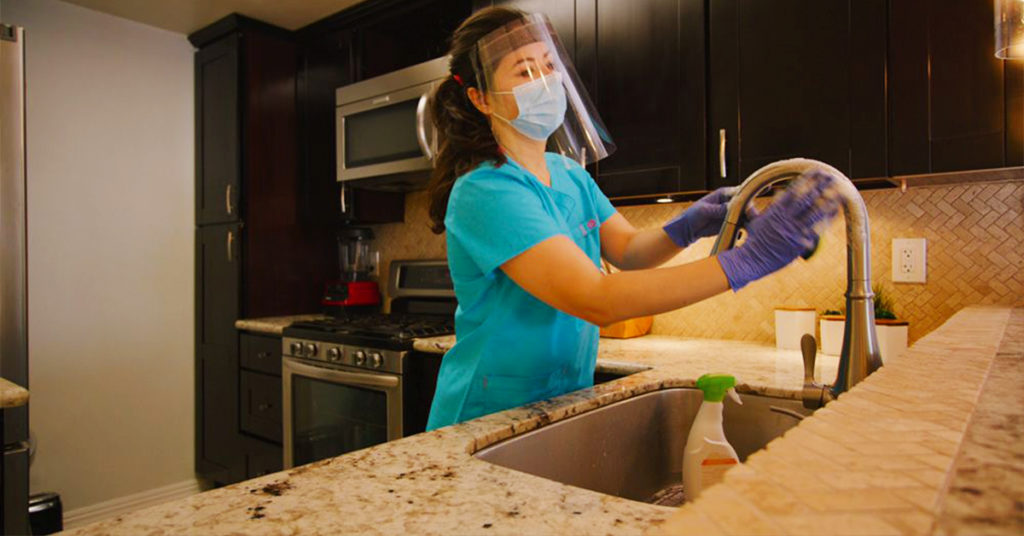
Photo: Leaf Organic Cleaning Services, Bellevue, Washington
How many cleaners will you send?
Answer: A standard residential cleaning crew is made up of 2 cleaners. Houses with more than 3 bedrooms or 2 bathrooms may require 3–4 workers. Ideally, your cleaning company should never send a single contractor, since this can increase chances of theft and could take more time than is necessary.
Red flag: Companies that send subcontractors for move-out cleaning services may not be liable for issues that occur. Avoid hiring companies that don’t use in-house cleaning teams.
Are your employees background-checked?
Answer: Cleaning companies should perform comprehensive background checks that include identity verification and criminal history.
Follow-up question: Are your employees well-trained?
This shouldn’t be a staffer’s first move-out cleaning job—they should have hands-on experience with the company’s cleaning processes.
What cleaning products will you use?
Answer: Professional services should use commercial-grade cleaning products, rather than typical household cleaners. Some companies may be able to provide eco-friendly products or steam-clean certain areas, if you prefer not to use chemicals in your home.
Is your company insured and bonded?
Answer: Trustworthy move-out cleaners should always be insured and bonded.
General liability insurance covers any damages to yourself, your property, or your pets during the cleaning process, while worker’s compensation insurance protects cleaners if they’re injured in your household.
Hiring a bonded cleaning company is the best way to cover your losses in case of theft.
Pro tip: Keep your valuables locked up or secured out of sight before cleaners arrive.
How will your cleaners enter my home?
Answer: Many cleaners prefer to have residents (and pets) out of the home during the move-out cleaning service—this shouldn’t be a cause for concern. That said, they should offer multiple options for you to provide access, such as dropping off a key at their office or providing a garage or lock-box code.
Follow-up question: How will my key be stored? Who will have access to it?
If you’re dropping off a key, make sure it’ll be kept in a central, secure location and will only be handled by those who need it.
Do you provide any guarantees?
Answer: Some move-out cleaners offer satisfaction guarantees that cover return visits or even refunds if they don’t provide adequate service. Usually, you’ll need to contact them within a day or two after the service occurs with any complaints.
Follow-up question: Whom do I contact if things go wrong?
Cleaning companies should be happy to provide the name of a supervisor for you to contact in case issues arise.
Red flag: Companies that only mention guarantees over the phone or in person may not follow through. A satisfaction guarantee is enforceable by the US Federal Trade Commission, but only if there’s a record of it being advertised—on a website or TV ad, for example.
What move-out cleaning costs

Professional move-out cleaning costs typically average $200–500 per service, $25–90 per hour per cleaner, or $100 and up per square foot. Companies that advertise high-end services can be more expensive, but they may offer more experienced and efficient cleaners.
A house in fairly good condition often costs less to clean than one with grime buildup. So keeping up with regular cleanings before your move is the best way to save—whether you do it yourself or hire a professional. Plus, “you’ll get to enjoy a clean house while you’re still living there,” Schiff notes.
Are independent housekeepers less expensive?

Regular maid services are mostly hired for routine cleanings, so make sure they have experience with extensive move-out cleanings before hiring one. Having more than one cleaner, as well as dedicated move-out cleaning processes, can streamline the operation.
Independent housekeepers, meanwhile, can be significantly cheaper to hire than a cleaning service. Many charge $15–40 per hour, and often provide more personalized services.
But there are several issues to consider before hiring an independent cleaner:
They may not be as efficient as a professional company if more than a broom cleaning is needed.
You’ll often have to do a basic background check and one-on-one interview to find someone you trust in your home.
Unlike professional cleaning services, they may not be bonded and insured.
Hiring someone through a task app usually doesn’t provide guaranteed protection either, though some apps may choose to compensate you for losses on their own accord.
Keep in mind that any housekeeper who’s required to work on a set schedule may be classified as an employee, which can come with tax responsibilities (such as filing IRS Form W-2) and insurance requirements (such as worker’s comp).
How move-out cleaners have helped Yelpers

If you want to avoid trouble (and get back your security deposit), it’s important to leave your home clean and tidy. Here’s how some Yelpers got the scrub-down they needed.
They wish they’d done it sooner…
“[We] would recommend Sparkling House 4You to anyone who wants a clean house for a great deal,” says Britt L. of Los Angeles. “Our apartment had accumulated a good 50 years of dirt, but Kamil and his team worked until it was, indeed, sparkling clean…. We used Kamil’s cleaning services for a move-out cleaning, but we wish we’d hired him before moving out as it would have been great to have such a clean home while we were actually living there!”
A thorough cleaning….
“Silvana and her crew [from Silvana’s House Cleaning] came to clean our apartment after we moved out. They showed up on time, masked, and were ready to get to work,” notes Kevin M. of Framingham, Massachusetts. “They quickly brought up all the supplies they’d need, and had me show them what needed to be done. They asked questions about certain items to ensure they didn’t do any unnecessary work (some appliances were being replaced). When they were finished, they called me so I could come back and check their work. Everything was spotless… it was a very thorough cleaning.”
Good job on short notice…
“When I spoke with Erick [the owner of Rapid Maid Specialists NYC], I explained what I needed: move-out cleaning of the whole house with deep cleaning of the kitchen and bathroom,” says Karen K. of Queens, New York. “He was able to schedule me quickly. He arrived on time and went through the house with me as I explained what I wanted done…. The whole house was spotless—the kitchen cabinets looked new again and floors were shiny. He went through the house when they were done cleaning to be sure everything was done to my satisfaction.”
Find a move-out cleaning service in your area.
Find a reliable cleaning service
Tell us about your move-out cleaning needs and we’ll connect you with trusted local pros.