How to keep your patio warm in cold weather
How to keep your patio warm in cold weather

Key takeaways
Patio covers and curtains are very effective at retaining heat
An outdoor fireplace combines comfort with ambiance
Patio heaters create immediate warmth in an outdoor space
Spring may be in the air, but in some places, March and April are still downright chilly. An open-air patio can be warm and sunny in San Diego but leave you shivering in Chicago.
Are there ways to keep your patio warm—and enjoy this cherished space—even in sweater weather? That’s the question many homeowners are asking, according to Yelp’s Top Backyard Trends, which reports “skyrocketing searches” for “outdoor deck” and “patio heaters” (jumping 373% and 263%, respectively from the previous year).
The good news: Even if mild temperatures are slow to arrive in your area, you can still have that outdoor family gathering. Read on for expert tips on enclosing your patio, creating wind barriers, and setting up outdoor heaters for maximum warmth.
Natural ways to keep your patio warm

Before going outside in winter, humans bundle up to trap body heat and stay warm. A similar concept applies to outdoor spaces. Here are some ways to retain warmth and block out cold.
Create an enclosure
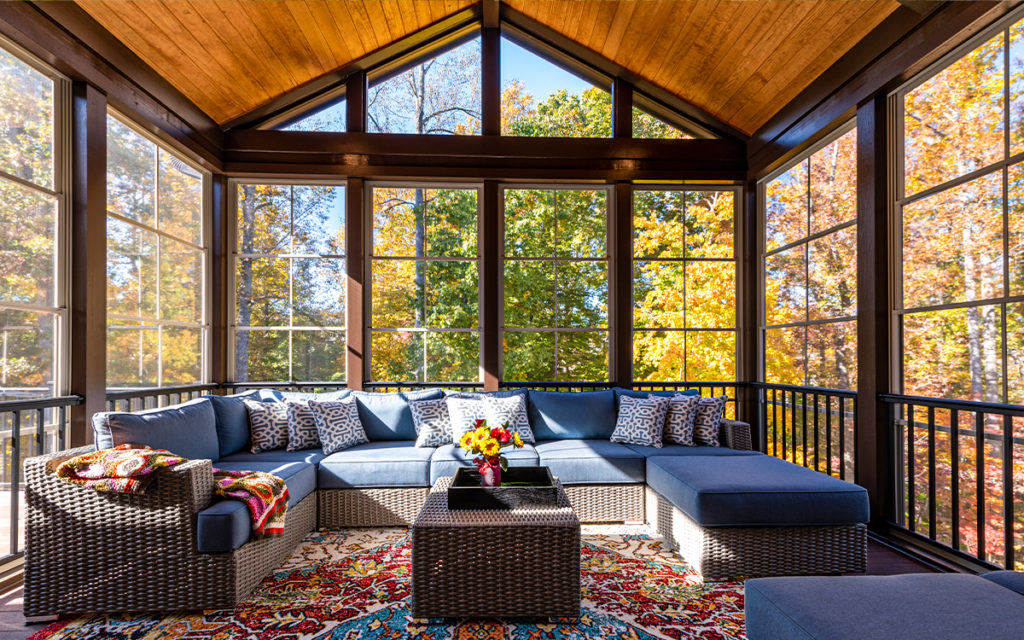
Sitting around a fire or patio heater may not keep you as warm as you’d like, because most of that heat escapes into the air. But patio covers and enclosures can help hold heat in.
“Patio covers keep heat localized… so your body heat (and maybe a space heater on particularly chilly days) can keep cold at bay,” according to experts at Texas Outdoor Oasis, a home improvement company in Wylie, Texas (where nighttime temps still dip into the 40s in March).
With help from a landscaper or patio contractor, you could add a solid patio roof or go big with a new custom-built pergola. Or you can explore portable prefab gazebos sold at your local home-improvement or garden center. In addition to helping conserve heat when it’s chilly out, these also have the advantage of reducing harsh sunlight in the summer.
To learn more, read Outdoor covered patio ideas: How to add a roof, pergola, or awning.
Block wind with curtains
“A covered patio is still going to let wind in,” says Jose Collazo Fuentes, owner of Infantry Landscaping, a landscaping and construction company in Atlanta. And wind chill makes you feel colder, even when the actual temperature is the same.
Adding rollup curtains around your existing awning or pergola has the double benefit of helping trap heat and block wind. Curtains also allow some air flow through when you want it, notes landscape designer Navid Derakhshan, owner of design and landscaping firm Outdoor Makeover and Living Spaces in Atlanta. Gentle breezes are part of the ambiance of outdoor living, he explains.
Add walls and barriers
While curtains can help retain heat, positioning your covered patio near a wall or other outdoor barrier will also help block cold air.
Get creative with planter boxes and portable outdoor green walls. These fence-like vertical structures—with living plants and attached watering systems—add natural beauty while blocking wind.
Glass windbreak screens are another way to warm up your patio or deck on the most blustery days. They provide a see-through barrier that’s easy to install and maintain.
Stock up on cushions and throw blankets
Staying warm on your patio doesn’t have to require lofty landscaping plans—there are simpler, less expensive ways to stay toasty. Consider keeping a stash of thermal blankets, wool pillows, and cushions made of thick, warm fabric on hand. You might even have a small basket of hand and foot warmers nearby for guests who want extra heat.
Crank up the temp with patio heaters, fireplaces, and fire pits
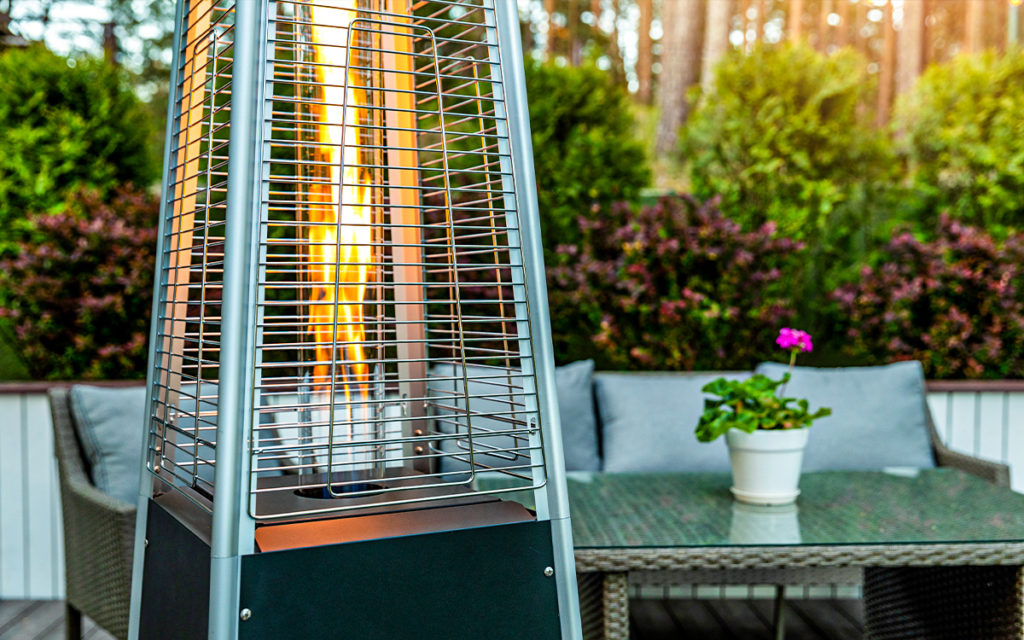
While the strategies above use natural ways to keep cold weather out, sometimes you just need to call on a higher heating power—a fire pit, outdoor fireplace, or space heater—to quickly crank up temps.
Fire pits and fireplaces
When it comes to creating warmth outdoors, there’s nothing quite like a fire. With this in mind, fire pits and fireplaces are sure winners. Just be sure they have plenty of ventilation—and if they’re wood-burning, they should be located where sparks aren’t a danger and smoke won’t drive everyone away from the patio.
To learn more about fire pits, read 7 fire pit styles: Which is right for your home?
Infantry Landscaping’s Fuentes estimates that a custom, professionally installed outdoor fireplace could run about $2,500, depending on size and materials. If that’s not in your budget, you can find a portable alternative at a nearby hardware store. “I recommend buying a fireplace from a home improvement center,” he says. “Turn it on, turn it off, and put it away as needed.”
Types of patio heaters

Outdoor space heaters are an inexpensive, effective answer to quickly warming a patio. They can be wall-mounted, freestanding, or sit on a tabletop. And several types are available, depending on the fuel you want to use.
Natural gas. Patio heaters powered by natural gas are expensive, but they’re easy to control and affordable to run. They require access to a gas line and shouldn’t be used in tightly enclosed spaces (because their fumes must be ventilated to prevent carbon monoxide poisoning). Natural gas patio heaters cost $120–2,000; most home models fall in the $200–600 range.
Propane. A propane-burning heater is more portable than one fueled with natural gas, but shouldn’t be used in enclosed spaces. You’ll have to replace the propane tank after about 10 hours of use, at a cost of $15–20. Propane heaters can cost $100–2,500, but most models fall in the $150–500 range.
Electric. An electric heater may cost more than a gas heater over time, because natural gas is almost always less expensive than electricity as a heating fuel. But they’re safe to use in covered and enclosed spaces. Electric outdoor heaters cost $70–1,200; most home models fall in the $70–400 range.
Infrared. This is a different type of electric heater. The infrared radiation heats up nearby people and objects, rather than the surrounding air (like traditional space heaters and fireplaces). The downside: they may need to be hardwired by an electrician. Infrared heaters cost $120–1,200; most home models fall in the $120–300 range.
DIY or hire a pro?

Photo: Concrete Creations, Reseda, California
If you just want to warm up your patio or deck, the DIY improvements explained above should suffice. But if you’re in the market for a full outdoor remodel—including adding radiant heating under the patio to keep it warm and ice-free—it pays to interview a landscape architect or designer will skills in heat design. “It takes experience, but also some guidance,” says Derakhshan. Landscape designers typically charge $70–200 per hour.
To learn more, read How to hire a professional landscaper.
If that’s out of your price range but you still need help setting up patio barriers or enclosures, consider hiring an experienced handyperson at a rate of about $40–80 per hour.
Bottom line, keeping your patio warm requires more than a single solution. You’ll need a combination of heat generated from a fireplace or other outdoor heating device—along with design and landscape features that contain and localize warmth—to maximize outdoor living space in colder months.
Find a landscape design professional in your area.
Find a reliable landscape designer
Tell us about your patio needs and we’ll connect you with trusted local pros.