Car heater not working? Here’s how to fix it
Car heater not working? Here’s how to fix it

Key takeaways
Failed car heaters can be mechanical or electrical problems
Car heater repairs range from simple and inexpensive to complex and pricey
Many car heater repairs require advanced mechanical knowledge
It’s a dreaded scenario: cold weather strikes, and your car’s heater suddenly starts blowing cold air or no air at all.
There’s a range of reasons why your car heater could stop working. Mechanically, the heater works like a small radiator with lots of moving parts. Hot coolant flows from the engine into the heater core (the radiator) to warm up its fins. A heater blower fan then pushes air through the heater core. This warms the air and distributes it through the cabin via ducts and vents. Car heaters are complex systems that can malfunction at any time.
This guide explains the top reasons car heaters fail—and the cost to repair them. You’ll learn about simple DIY fixes and when to call a pro.
For more, read How to find a good mechanic: Quick tips for quality car repairs
Car heater not working: Causes and symptoms
A car heating system does more than just blow hot air. It also interacts with systems that run the air conditioning and stabilize engine temperature. If your car heater fails, your engine may become abnormally hot or cool, or your car’s air conditioning might not work.
Some handy car owners can complete simpler repairs, like refilling coolant or replacing a blower motor relay. However, in-depth repairs—including repairing faulty wiring, replacing a heater core, replacing a blower motor, or installing a new blower motor resistor—require advanced technical knowledge.
Reasons for a car heater not working include:
Low coolant level
Your car’s heater relies on coolant to circulate the engine’s heat. When there’s not enough coolant, the heater blows cold air. This often causes additional symptoms, like when the engine reaches a high operating temperature, for example, the temperature gauge on the dashboard will be higher than normal.
Vehicles don’t consume coolant—they reuse it for several years—so this issue generally happens only in older cars that have developed a leak. Sometimes it’s due to a failed gasket that leaks coolant inside the engine.
A one-gallon bottle of coolant generally costs $6–20, depending on the brand and whether it’s manufacturer-specific or universal.
In most cases, you don’t need a mechanic to refill coolant. Just find the location of the coolant reservoir in your owner’s manual. Make sure to not open the pressurized radiator cap, which will have multiple warnings on it.
If you feel uncomfortable refilling your coolant, you can take it to a mechanic to complete the process.
Faulty thermostat

The thermostat controls the flow of coolant. At low engine operating temperatures, it traps the coolant in the engine until it warms up. Once the coolant warms up, the thermostat opens. This allows the coolant to flow through the heater core (heating your car) and into the radiator to cool back down.
If the thermostat gets stuck open, the coolant may never reach the proper temperature to heat the heater core, resulting in only slightly warm air. This is a common failure in a vehicle that’s at least 5 years old. Stuck-open thermostats generally result in lower-than-normal engine operating temperatures, so take note of your temperature gauge on your dashboard.
The cost of replacing a faulty thermostat varies greatly, as some vehicle thermostats are significantly more difficult to replace than others. Generally, the price ranges from $150–300 for parts and labor.
Failed blower motor or fan
The blower motor powers the fan that circulates hot air through your vehicle. If there’s little or no airflow when you turn on the heater, it might be due to a faulty blower motor or a failed fan.
There could be other failures that mimic symptoms of a broken blower motor. You’ll need a complete diagnostic to diagnose the problem.
Most blower motors and fans are relatively simple to access and replace, but others require removing a significant portion of the dashboard, which can increase cost. You can expect to pay anywhere from $150–500 for a new blower motor or fan, including parts and labor.
Failed blower motor resistor
The blower motor resistor controls the speed of the blower motor by providing it with less resistance as you turn up your car’s heat. At the highest setting, the resistor provides no resistance, allowing the full 12 volts to flow to the fan.
When the blower motor resistor fails, the heater may only work on the highest setting. If the resistor’s entire circuitry fails, it won’t even work at the highest speed.
Electrical components are unpredictable and can break at any time. For that reason, a blower-motor-resistor failure can occur in both older and newer vehicles.
Blower motor resistors can be difficult and expensive to replace. Expect to pay $150–500 for a new blower motor resistor, including installation.
Clogged heater core
As the cooling system continuously heats and cools antifreeze over time, coolant will degrade, congeal, and lose its ability to fight corrosion. Rust and congealed coolant can easily clog veins in the heater core.
The car will produce little to no heat inside the cabin if a clog is preventing the heater core from getting enough coolant flow. Engine overheating is also a concern because clogs impede the engine cooling process. It takes years for coolant to degrade, so this problem typically only applies to cars that are 5 years old or older.
The heater core often resides deep within your vehicle’s dashboard, making it fairly difficult to access. It’ll cost $500–1,000 to have a new heater core installed.
Faulty climate controls
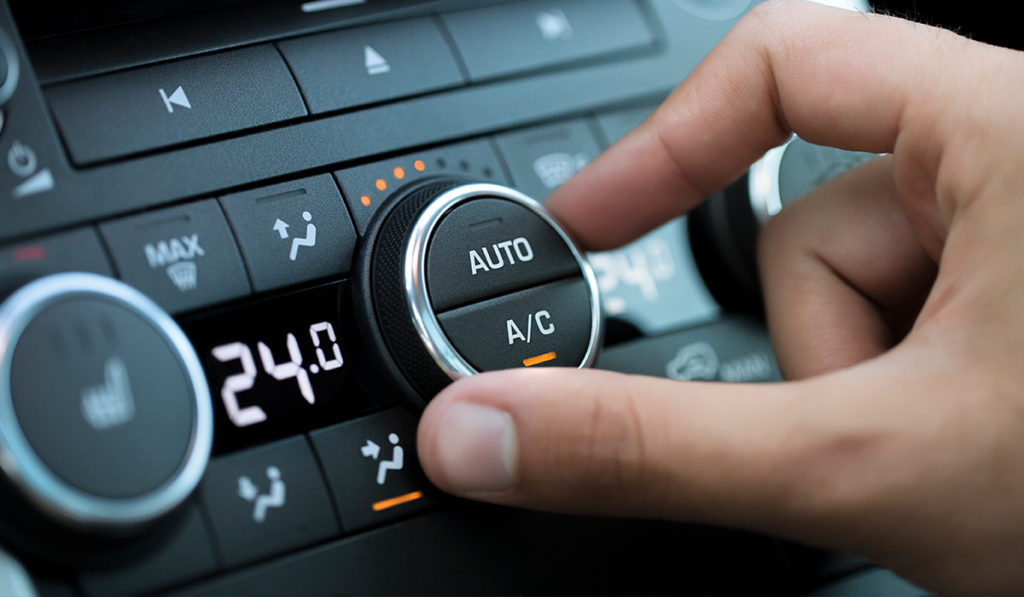
Climate controls are the knobs and buttons that allow you to control cabin temperature. Whether they’re electronic, manual, or vacuum-powered, climate controls can fail, preventing you from being able to adjust the temperature and air flow.
If temperature controls stop working, for example, it may cause the blend door to malfunction, which controls the mix of hot and cold air flowing into the cabin. You may experience extremely hot or cold air, with no ability to adjust the temperature in between.
Electronic controls have no telltale symptoms; they’ll just stop responding.
Mechanical controls will often feel looser than they did before.
Vacuum-powered controls will no longer produce a faint hissing sound when you’re changing the setting, or you’ll hear a constant hiss from the control panel.
Faulty climate controls impact new and old cars alike. You may pay $100–300 to replace a failed component.
Malfunctioning electronics
Wires, fuses, and relays all come together to manage the climate control system. A faulty wire, blown fuse, or broken relay can cause an entire system failure.
Classic cars have fewer wires and fuses, making them relatively easy to repair. Cars became more complex from the mid-1970s on, with intricate wiring systems that need a pro.
While a fuse or relay is relatively simple to fix, in-depth wiring issues can be costly. Expect to pay from $100-1,000 for a diagnostic and repair, depending on complexity.
Car heater repair tips

Cars break down over time—that’s just the way mechanical items work—but there are some tips and tricks to extend the longevity of your car heater.
Yearly checkups. A pro should inspect your vehicle at least once a year. If they find mechanical issues, fix them now before they become bigger problems later.
Coolant flushes. Degraded or congealed coolant is a common cause of malfunctioning car heaters, which can be avoided with regular coolant changes and flushes. Every vehicle has its own recommended interval for these coolant exchanges. Refer to your vehicle’s owner’s manual for specifics.
Alternatives to car heater repair
If you feel that repairing your car heater isn’t worth the cost—say, if you’re tight on funds or the car’s value is too low—there are a few alternatives to repairing your car heater.
Bypass the issue. Mechanics may be able to bypass the failed component by connecting the inlet and outlet hoses with a fitting—a less expensive option. While this won’t fix your failed car heater, it can prevent that failing component from causing other mechanical issues.
Skip the repair. If your mechanic determines that the failed heating component won’t cause any additional problems, you can simply forgo the repair. But keep in mind that you won’t have a windshield defroster in snowy or icy conditions.
Replace the vehicle. If your vehicle is old or in poor condition, it might make sense to get a new car rather than shell out for frequent or costly repairs.
Frequently asked questions
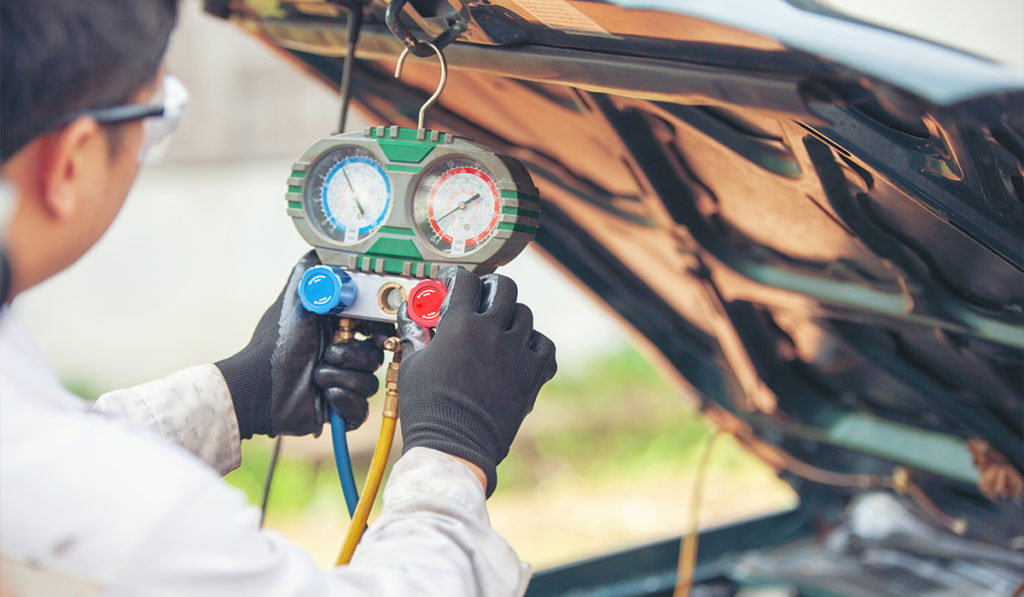
Here are a few common questions about car heater repairs:
How long will the car heater repair take?
It depends on the type of repair. Simple thermostat repairs could take less than an hour. Complex heater core repairs that require disassembling the dashboard could take a few days to a week.
How much will a car heater repair cost?
Like timeframe, the cost varies by repair. Heating system parts are relatively inexpensive, but labor and diagnostics can add up.
A heater core itself may only cost $50–100, for example, but the mechanic may bill for 5 hours of labor to disassemble the dash. With labor rates generally ranging from $47–215 per hour, 5 hours of labor could add another $235–1,075 to your tab.
You also have to account for diagnostic time, which is billed like labor. Most mechanics start with one hour of diagnostic. More complex electrical diagnostics may require 2 or 3 hours. If the issue needs more time to diagnose, the repair shop will call and ask for additional time.
Minimize labor costs by comparison shopping. You can also save money by sticking to smaller local repair shops and avoiding large dealerships or franchise repair facilities. The latter tend to have significantly higher labor rates.
Find an auto repair professional in your area.
Find a reliable auto mechanic
Tell us about your auto repair needs and we’ll connect you with trusted local pros.